In this, the second interview in my ‘Voices’ series, which collects the deeply personal wisdom and experience of some very special people, Nicole Albrecht shares her journey with mindfulness.
Nicole, a mindfulness practitioner, educator, and researcher, has spent the last two decades working in schools, universities and with community programmes, focusing on wellness and nature-based mindfulness.
She is currently a Wellbeing Lecturer at Flinders University in Adelaide, Australia, and has also facilitated a wide range of undergraduate and postgraduate wellness courses at RMIT University located in Melbourne.
What is Mindfulness?
One might say that Nicole’s first experience of practising mindfulness came through meditation in the early 1990s. As an undergraduate studying economics at The University of Adelaide, she started meditating purely as a means to memorize complex information.
“I used to use it for economics exams…you know, get in a really still place and meditate and try and…memorize questions, because you had to memorize everything, and then just write everything in exams.”
As well as being an effective tool for memorization, Nicole also recognised that meditating gave her a “sense of peace and feeling [of being] really connected to everything, and really centered.”
Nonetheless, this peace and connectivity was transient; she relates how it faded each time she would “get caught up in daily life,” and how that same feeling would then only substantially return when she returned to her meditation practice.
Nicole came across the term mindfulness for the first time in 2009, whilst studying for a Master of Wellness at RMIT. Interested in the question of how meditation relates to wellness, she began to explore the emerging field of research into mindfulness practice.
Based on her reading, and personal experience of meditation, she saw in mindfulness a way to bring the benefits of meditative practice into daily life and her everyday experiences, including everything from “mindful conversations” to “mindfully doing the dishes.”
Mindfulness, Nicole explains: “Involves observing and participating in each of life’s moments. …I think embodying is a good word. Like, you really feel connected to your body. …And you’re not thinking of the future or the past or any worries, but you’re really centered in that moment.”
Nicole characterises mindfulness as something innately human, noting that the experience of mindfulness is reminiscent of her experience of childhood: “I remember that feeling I had when I was a child. And I felt that mindfulness when I was a child because you’re allowed to explore and…you had a very free childhood.”

A way of being
As Nicole relates her perspective on defining mindfulness, a term often debated by academics and practitioners alike, it becomes apparent that the explorative freedom of her childhood is also present today in her approach to research.
She explains that she has read lots of different literature, seeking to understand the term in the same way that she has explored “wellness”, a word which also comes with a myriad of different definitions.
She has collated a mental list of ideas that she shares with her students when defining mindfulness. This includes terms such as “wisdom” and “curiosity”, but also the notion of being “like a ninja with no feelings.” Alongside the contrasting warmth of loving kindness, the list is certainly broad, and Nicole relates that she has experienced them all within her own practice; not boastfully, but to convey the depth of her own reflection.
Rather than any attempt at intellectually pigeonholing the term mindfulness, it is evident that Nicole has given considerable pause for thought in formulating her answer, adopting a wide-ranging approach that reflects both her extensive research, and her personal practice and insight.
After all, as Nicole reminds me, John Kabat-Zinn, the creator of the Mindfulness-Based Stress Reduction (MBSR) programme, “never calls mindfulness a concept. It is a way of being.” She chuckles to herself briefly as she plays with the idea that it is also a concept after all.
What is clear is that for Nicole, mindfulness isn’t “something you can learn and then you go: ‘I’ve learned that. …You have to continually remind yourself of mindfulness.”

Connection
“The world in which we live is crying out for humans to realise the interdependence that exists between all life forms.” (Morgan & Albrecht, 2019 cited in Albrecht, 20201)
Nicole shares with me a chapter she wrote in 2020, entitled: “Nature-based mindfulness and the development of the ecological self when teaching in higher education”.
The chapter weaves together two of her enduring interests in her work with wellness and mindfulness: the natural world and education. It tells a story of Nicole’s work with colleagues to inspire young people in education to engage positively with nature, not only for the peace it brings, but also as guardians of the environment.
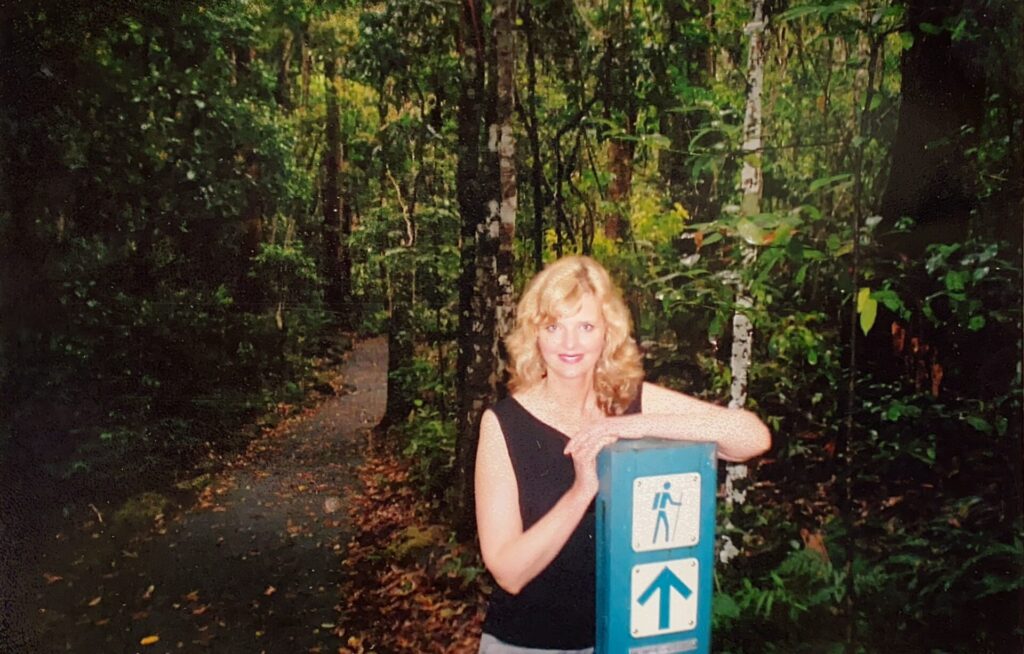
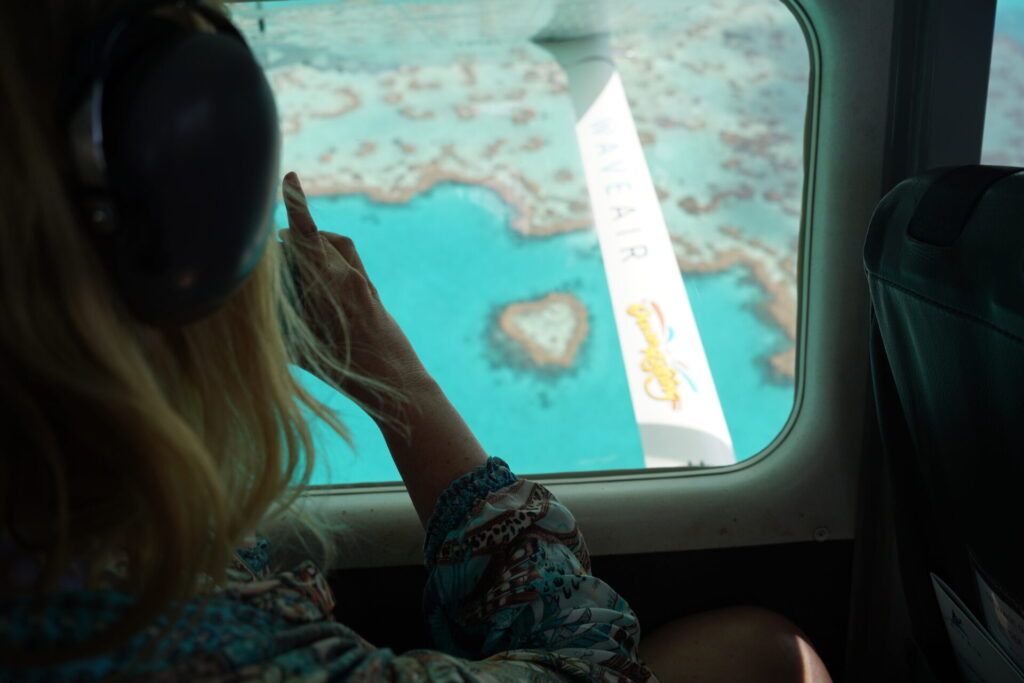
The natural world has long been a source of peace and inspiration for Nicole. In addition to a recent restorative visit to the Whitsundays, an archipelago of tropical islands which lie between the coast of Queensland and the Great Barrier Reef, she relates how she enjoys walking on one of the many beaches close to home in Adelaide, or even just engaging in some simple gardening.
Nature’s capacity to engender an inner stillness and a sense of awe is undoubtedly something transformative for Nicole. Nonetheless, for her, the power of nature is not simply impactful on an individual level, it also inspires both a meaningful connection to the natural world that surrounds – and supports – us, and indeed, human connection.
“You know, for example, hiking in…natural spaces, and everyone’s just in awe of the beauty and they’re connected, and people are helping each other…get up a mountain or something and not fall.”
Connection then is very much at the heart of Nicole’s explorative research and work with mindfulness; whether that is connection with ourselves on an individual level, with the world around us, or indeed with one another. In this vision, being mindful is possibly something of a thread that leads us to the web of interdependence that exists between all life forms, and in turn shines a light on the intrinsic value of the natural world.
Mindfulness and education
I ask Nicole about the adoption of mindfulness into the education system in Australia. She tells me the process has been relatively rapid, in contrast to many countries.
Nicole recalls that early on in her research she undertook a project: “I was asked to come into the school to analyze how mindfulness was adopted. …I remember a student teacher coming in and going: ‘Oh, it’s really interesting to be here, but I’ve never heard of this thing called mindfulness.’ So, when I started it, most of the population in Australia had not heard of mindfulness.”
Today, less than 15 years later, “mindfulness is quite widespread in schools,” Nicole explains. “Most schools have wellbeing departments, wellbeing leaders, strategic plans for wellbeing, and then they have different programmes that incorporate mindfulness.”
This development, she says, began at first with “passionate individuals” at a grassroots level. Initially, it was school counsellors, psychologists and teachers who used the emerging body of mindfulness research to obtain grants to support young people in education.
“Now,” Nicole continues, “leaders are the ones who implement the programmes because it’s just so widespread.”
Nicole suggests that the rapid adoption of mindfulness in education in Australia could be accredited to the openness of Australians to natural health therapies and trying new things generally.
Yet, she also credits the speedy incorporation of mindfulness into classrooms there to the passion of many individuals, particularly teachers. The passion of educators is nonetheless not a specifically Australian phenomenon: “Teachers have taken [mindfulness in schools] to a different level all around the world,” Nicole explains.
A culture informed by wellness
Nicole acknowledges that the Australian education system is certainly advanced in respect to implementing mindfulness and wellness programmes. Nonetheless: “We have one huge problem,” she admits, “[which is] that the teachers in Australia are very stressed and overworked.”
Being stressed and overworked and practicing mindfulness in the classroom, do not go together, Nicole explains. And like the passion of teachers, this is not something isolated to Australia either; the same, she says, is true of both the UK and the USA.
Teachers are having to do too much, Nicole tells me. The knock-on impact of this is that many worldwide are leaving the workforce. It’s something she has seen amongst wellbeing leaders as well as other teachers.
The other impact in education is on the children of course: “They’re going to be affected by their teachers”, Nicole points out. Learning to develop peace and connection from stressed and disenchanted educators is counterintuitive.
“I always go back to the wellness dimensions, and having that balance in your life. …You need a balance of work.”
Nicole reels off a list of various aspects she considers important for human wellness; the ingredients perhaps of a culture informed by wellness. Naturally, the environment is on this list, with equal emphasis placed on giving to the environment as well as being within it. Financial wellness, creative wellness and sufficient time with friends and family also feature.
She relates how a colleague told her that teachers only work 4 days in Sweden, which positively impacts their wellbeing. In contrast, Nicole explains, the Australian “work culture…does not permit that, because…of the way it’s structured and that certain people want to make lots of profits.”
Yet the success of mindfulness in education surely depends on it being taught by well-trained educators who are content, who recognise its value within their own life experience, and who are able to actualize its potential benefits for themselves. Nicole certainly believes this to be the case.

Where next for mindfulness?
The benefits of mindfulness for children and young people are entirely clear for Nicole. “It helps on every single level, like academic, social [and] environmental,” she explains.
She tells me that mindfulness develops skills for life in children, such as the ability to take a mindful pause, enabling them to respond more effectively to situations in their day-to-day lives.
So, where next for mindfulness in education?
“I’m very focused at the moment on how we integrate mindfulness with other curriculum areas because we want…a mindful culture.”
Connecting mindfulness with other subject areas has become a key area of exploration for researchers in the field; indeed, my own PhD research will focus on this very question in the context of Waldorf education.
Mindfulness, as Nicole presents it, is entirely connected to our normal, everyday lives. Joining up the practice of mindfulness into every corner of the curriculum in schools seems therefore a logical next step.
Fully preparing teachers with the skills they need before they go out into the workforce is something else that Nicole singles out. Empowering mindful educators is key to effectively delivering a more mindful education. Nicole notes the challenges experienced by the MYRIAD Project in the UK, where teachers were insufficiently trained to teach mindfulness in the classroom.
Beyond these, mindfulness with students who have ADHD and autism is of particular interest to Nicole, as well as research into mindfulness’s role in mitigating the challenges of climate change.
“They’ve shown that people who practice mindfulness can cope better with climate change and also detecting in their environment if something’s off. People who practice mindfulness have these kind of ninja skills and can go: ‘Hang on! There’s something wrong over there.’ And they can identify problems as well. So…there has been a lot of research on that, but it would be nice to expand on that.
Finally, Nicole turns our attention to one of the hottest topics of our times: Artificial Intelligence (AI). She suggests that compassionately-programmed AI may well one day be the go-to for humans seeking emotional support. And the same might prove to be the case for education as well: “If a student has a question,” Nicole imagines, “and then presses a button…a [holographic] researcher comes into their room and answers it and has a chat.”
AI seems to open up a whole new range of possibilities for mindfulness and wellness research, Nicole posits.
“It will be an interesting future. …How we can develop more mindfulness in society may be a question that AI is particularly interested in answering.”
- Albrecht, N.J. (2020). Nature-based mindfulness and the development of the ecological self when teaching in higher education. In Exploring self toward expanding teaching, teacher education and practitioner research (pp. 157-177). Emerald Publishing Limited. ↩︎