One of my great joys in undertaking research into education and mindfulness practice is how it has brought me into contact with many friends and colleagues who share this space.
This contact has broadened my understanding through the insights these individuals have shared in our conversations. It has challenged my thinking, as well as offering new avenues for exploration.
I want to acknowledge these rewarding interactions and share them with you.
To that end, this is my series: Voices, which collects the deeply personal wisdom and experience of some very special people.
In the article below, I use the term ‘Waldorf’ to refer to the educational philosophy, which is commonly also referred to as ‘Steiner’ education, or ‘Steiner-Waldorf’ education.
A Waldorf Class Teacher
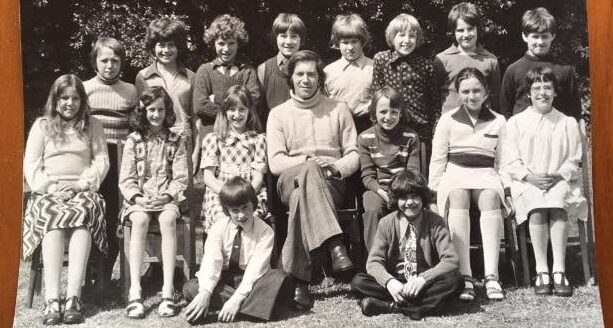
Eric Fairman never planned to become a Waldorf teacher. A foster child, looked after by the Peredur Homeschool – a charity set up in the 1950s by Siegfried and Joan Rudel – he was educated at their centre in East Grinstead from ages 12–16.
Peredur, which followed the philosophy of Rudolf Steiner, would play an important and enduring role in Eric’s life and career, as would Joan. On a walk together one day at the Potterspury Lodge School – where Eric was employed as a careworker in the 1960s – she suggested he become a Waldorf Class Teacher.
“One never argued with Joan,” explains Eric. And thus, a suggestion became a reality.
In 1970, Joan arranged a year of training for Eric at the Stuttgart Teacher Training College in Germany, where he also taught English Language part-time. In 1971, he returned to England to work at the now closed Michael House Steiner School in Derbyshire.
This would be the beginning of a four-decade career in Waldorf that would see him travel the world, working in various schools across the US, Canada, New Zealand and Australia before eventually retiring to Tasmania.
A Path of Discovery
I first met Eric through his writing. When I became a Waldorf Class Teacher in 2012, I was handed a variety of books to support my teaching, including one or two from Eric’s series, ‘A Path of Discovery’. These books, for teaching ages 6 to 14, were written as a programme for teachers and include a wealth of resources.
And yet their creation was pure accident. Appointed as a Class Teacher by the Glenaeon Rudolf Steiner School in Sydney, Australia in 1996, Eric was informed that he would need to produce an end-of-year report to summarise what he’d taught his new class.
And so he set about writing what evolved into “voluminous” notes. From time to time, student teachers at the school would attend Eric’s lessons for teaching practice, and, noticing this growing body of notes on the desk, asked for their own copies.
When the time came to submit the report, he discovered that the requirements had only ever been a tick-box page or two, listing what he’d covered. Instead, the ‘A Path of Discovery’ series was born, and published at the encouragement of another student teacher.
The books continue to grow in number; Eric is about to publish his latest offering: The Lily, Rose and Lotus. Reflecting deeply on the Waldorf pedagogical indications for children aged 10-11, this new book brings together Ancient Indian culture and Vedic mathematics with botany and natural science.
More than 90 pages in length, it represents two enduring characteristics typical of Waldorf education and educators respectively: the purposeful interweaving of child development with richly imaginative, practical and appealing lessons, and the commitment of teachers to meet the needs of the pupils in their care.
Threefold education
“You’ve got to get their attention; their full attention,” Eric states when I ask him about thinking, feeling and willing, the threefold understanding of the human being which lies at the heart of Waldorf education.
This threefold understanding – commonly simplified as head, heart and hands – forms the basis for how child development is understood in Waldorf schools. In simple terms, it means adopting a holistic approach to teaching that pays heed not only to the intellectual, but also the emotional and physical life of the child.
Whilst all three aspects are important throughout the Class Teacher period (ages 6-14), the emphasis placed upon them depends on the age of the child. Physical activity, for example, forms a central part of daily life for Waldorf students of all ages, but the kinds of activities that the children engage in will change over time.
Eric says that a greater sense of inner purpose should be brought into class activities by ages 10-11, transitioning from the often-exuberant rhythmic fun and games of younger classes to developing stronger connections with heart forces as students enter their second decade and become increasingly aware of the world around them.
Eric relates how he took his class of 9 and 10-year-olds into Sydney in 1998 for a Teddy Bear Picnic to raise funds for Doctors Without Borders. This was not simply about supporting others, it was about nourishing within the children the emerging but deeply-felt sense of relationship with other people and communities.
Such consideration from the teacher is at the heart of the Waldorf pedagogy, whether it be creating games for six-year-olds or thought-provoking tasks for adolescents – but that doesn’t mean teachers always get it right:
“If you make the wrong decision, the children let you know. They do. In no uncertain terms.”
Indeed, Eric chuckles as he shares how his class would sometimes indicate their displeasure, changing his name from Mr Fairman to Mr Unfairman.
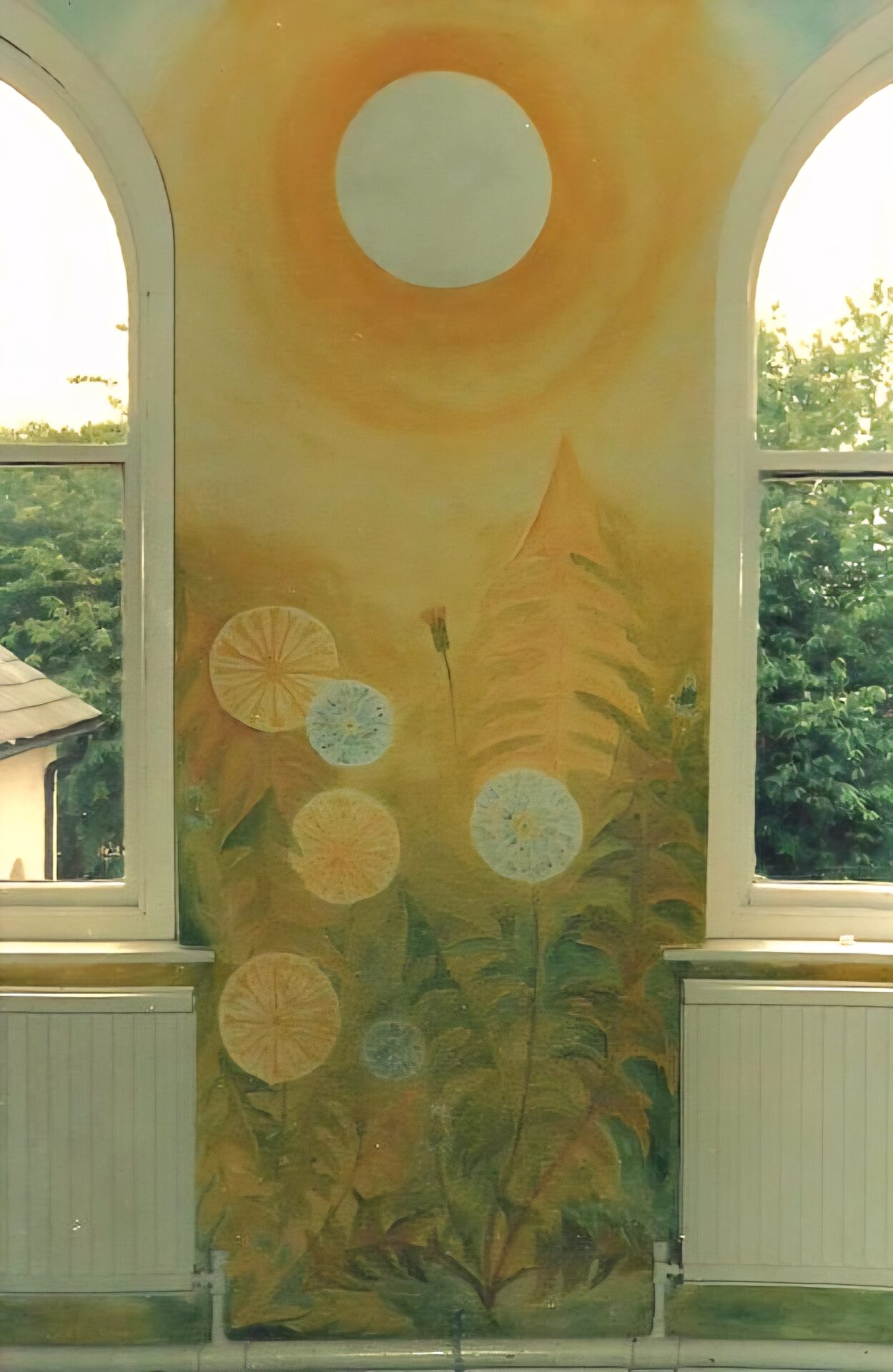
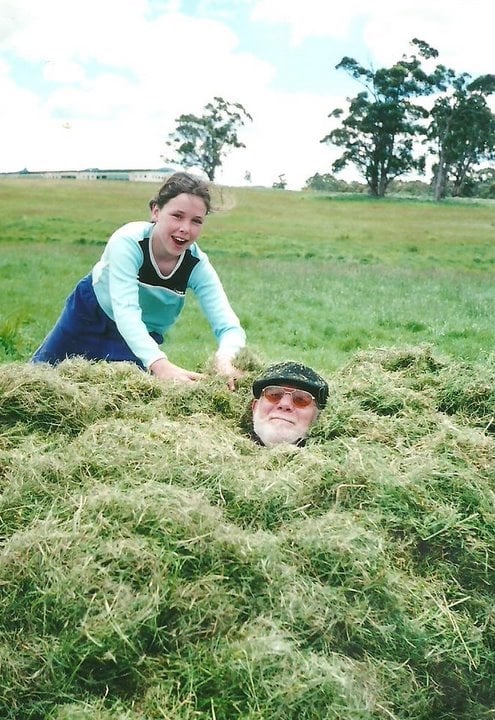
Eric’s classroom mural for the children of his Class 5 at Michael House in 1984, and teaching in Tasmania at Tarremah Steiner School.
An incredible responsibility
Eric uses the word ‘destiny’ to describe how Class Teachers shape the lives of the children in their care.
“It is an incredible responsibility. With every child, you are having a real impact on their life and their future,” he explains.
This vision of teaching concerns more than academic subjects like maths and languages. It entails educating the very person of the child on an individual basis; caring in a very human and engaging way for “who they are, and who they’re going to be.”
Class Teachers often remain with their classes from when the children are six until they reach 14. The great benefit is the depth of connection with, and knowledge of, the individual students, and how it guides and infuses the teacher’s work with them over time. Even so, in a class of 32 – Eric’s largest contingent – taking responsibility for their development in such a manner is no mean feat.
Eric is not unrealistic about his time as a teacher – accepting that he was not able to build a relationship with every child he taught. Like with all families (the word he uses for his classes) not everyone gets along. He remains in contact with many of his students, however, though they now live in all corners of the Earth. The eldest have recently turned 62, he tells me, the age he was when he retired.
“I look at them; I think they’re so young!” he jokes.
The inner life of the teacher
In Waldorf education, nurturing one’s inner life is considered an essential undertaking for teachers, who are not simply imparting knowledge and skills to their students, but teaching through their own behaviour.
Steiner himself advised educators: “You will not be good teachers if you focus only on what you do and not on who you are.”1
This idea of cultivating an inner life as an educator can be very personal but Eric addresses it happily, expressing that his own understanding is underpinned by two related elements: connection and awareness.
“It’s not about separating the children’s needs from my own – it’s about what we need as a class, and to go with the class, with the children, for the needs of the children.”
It’s an instinctive thing, Eric explains, not something that he’s ever dedicated focused thought to. In practical terms, it included reminiscing on each day and on what was taught and how it was received. If the lessons went well, he would ask himself how he could take the class further. If there were challenges, he would reflect on how the next day could be better.
For Eric, such an approach is as much a meeting of the teacher’s own needs as it is a meeting of those of the children. Teaching should nourish the teacher as well as the students. The idea of “everyone having a good day together,” that he offers in our conversation, carries far greater depth of meaning than the simple phrase might initially suggest.
“I’m sure that I too learned a lot from the children. About different characters, different human beings, how to relate to different people, how they related to me, what their needs were, what my needs were as well.”
Teaching then, is all about personal growth – of both the students and of the teacher. Some might characterise the connection underpinning such growth as ‘love’, though Eric steers me away from the word, cautious of how it can be misrepresented these days.
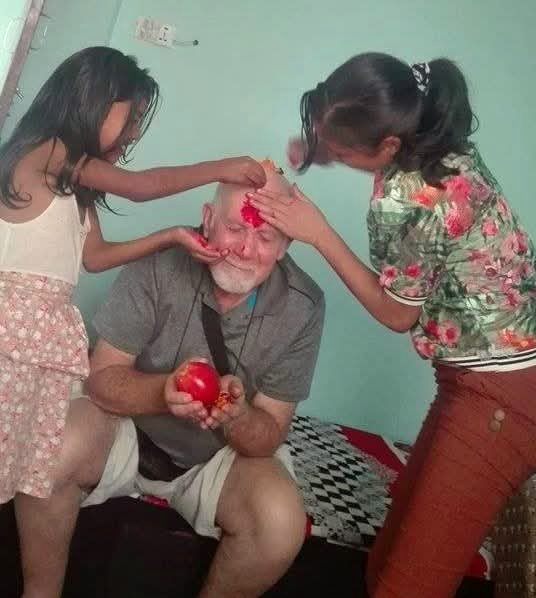
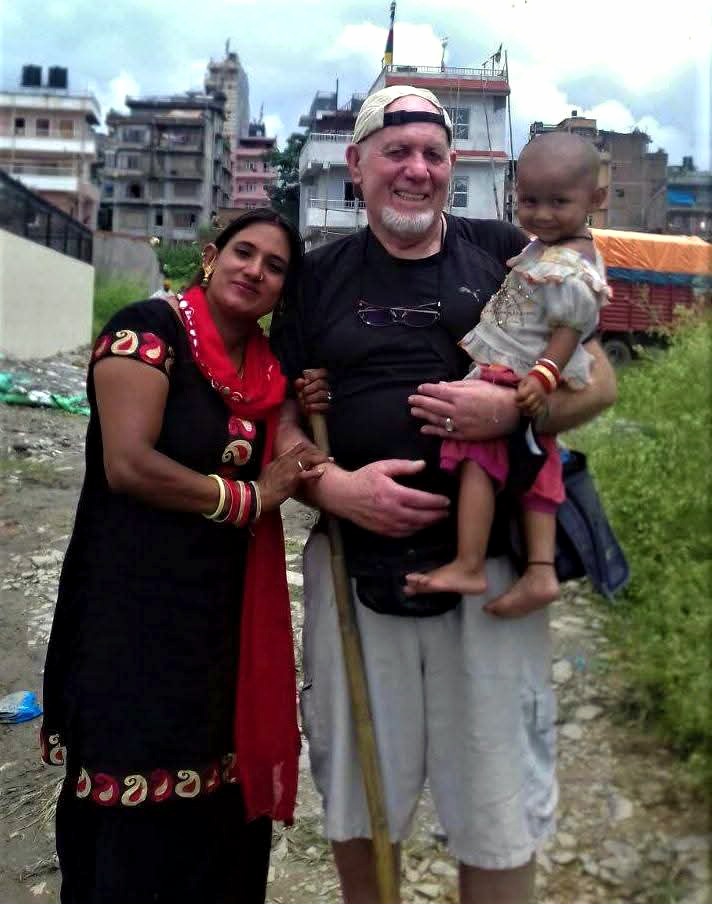
In Kathmandu: Receiving a Tika mark to his forehead as a blessing, and with friends.
Social endeavours
Eric shares with me a piece of his own writing, in which he remembers the words of his longtime friend and mentor Siegfried Rudel, who died in 2017:
“We know we have reached maturity, when we put the needs of others before those of ourselves.”
In the same piece and in his own characteristically frank words, he adds (with a nod to life in retirement): “Now is not the time to sit back in the rocking-chair, give ourselves a congratulatory pat on the back, and be self-indulgent!”
With his 86th birthday just around the corner, Eric is once again raising funds for another project in Nepal, something he has done since 2010. This time it’s for a street party for dozens of disadvantaged children living in a slum ghetto who have celebrated his big day in this manner for the last five years.
“I’m on the phone every day to Nepal. I get at least three calls a day. And everyone there calls me Papa.”
Papa stopped off in Nepal on his way home to Australia fifteen years ago. The experience of seeing so much poverty and suffering there spurred him on to make multiple return visits to Kathmandu. He estimates that he has spent more than two-and-a-half years in Nepal, cumulatively, since 2010.
In that time, he has also supported the Tashi Waldorf School in Nepal’s capital, continuing to share his knowledge and experience of Waldorf pedagogy, as well as working towards his personal commitment of raising funds to support the education they provide to many disadvantaged children.
Yet Eric doesn’t call this ‘work’. Instead, these are his “social endeavours.” From his home in Tasmania, he continues to support the causes dear to him, reflecting that his life up till now has been nothing more than preparation for the charitable works he undertakes today.
His good work doesn’t go unnoticed by some within his local community. They have started providing him with meals; a compassionate act by those who have welcomed him there, in recognition of Papa’s compassion for the children of Kathmandu.
- Foundations of Human Experience. ↩︎
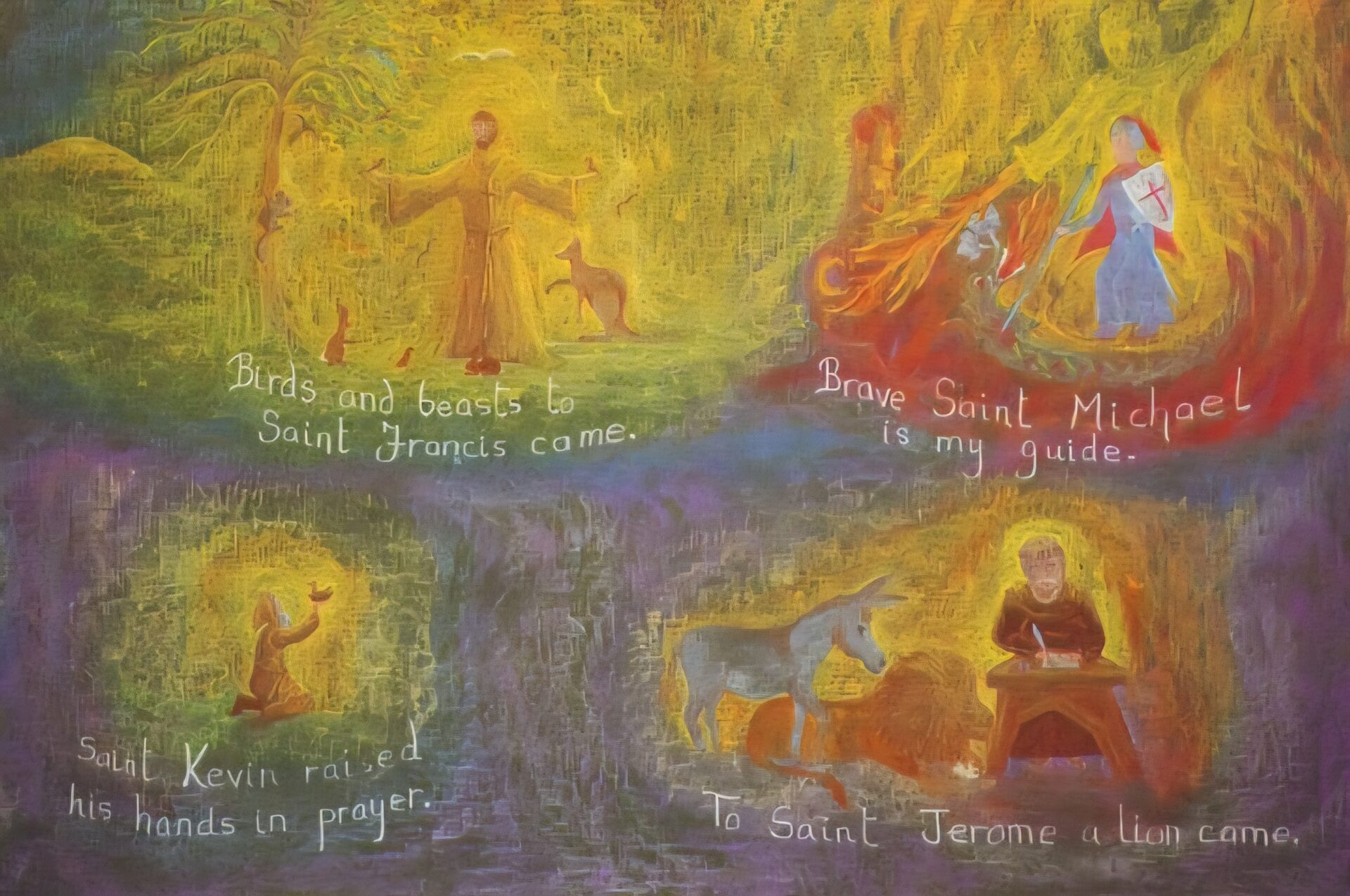
Eric’s blackboard drawing of the Saints.